Transition State Methods
NEB, dimer methods, and tools for finding reaction pathways on potential energy surfaces
The landscape
Finding transition states and minimum energy paths is central to understanding chemical reactivity: catalysis, diffusion, phase transitions. Two families of methods dominate:
Double-ended: Nudged Elastic Band
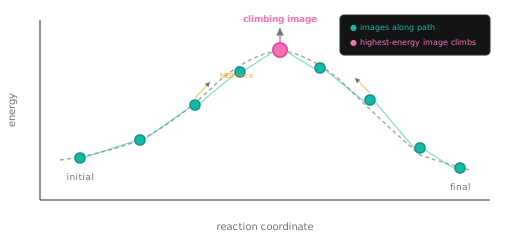
The NEB finds minimum energy paths between known initial and final states. Images are distributed along the path and connected by spring forces. The climbing image variant pushes the highest-energy image uphill to converge on the saddle point.
Single-ended: Dimer Method
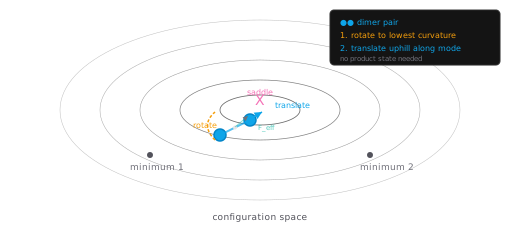
The dimer method finds nearby saddle points without knowing the product state. A pair of configurations (the “dimer”) rotates to align with the lowest curvature mode of the Hessian, then translates uphill along that mode. Only forces at two points are needed per step.
Enhanced NEB methods
The climbing image NEB (CI-NEB) identifies the highest-energy image along the band as the transition state estimate. We developed an enhanced variant that aligns Hessian eigenmodes at the climbing image, combining CI-NEB with minimum mode following (MMF) in an adaptive hybrid (Goswami, Gunde, and Jónsson 2026). On the Baker-Chan test set using PET-MAD machine-learned potentials, this reduces force evaluations by 46% relative to standard CI-NEB. On heptamer island transitions on Pt(111), the reduction is 28%.
Path visualization
Standard one-dimensional energy profiles discard geometric context. We developed a 2D RMSD projection that maps reaction paths into a plane where structural similarity is visible, with reliability contours from uncertainty estimates (Goswami 2026).
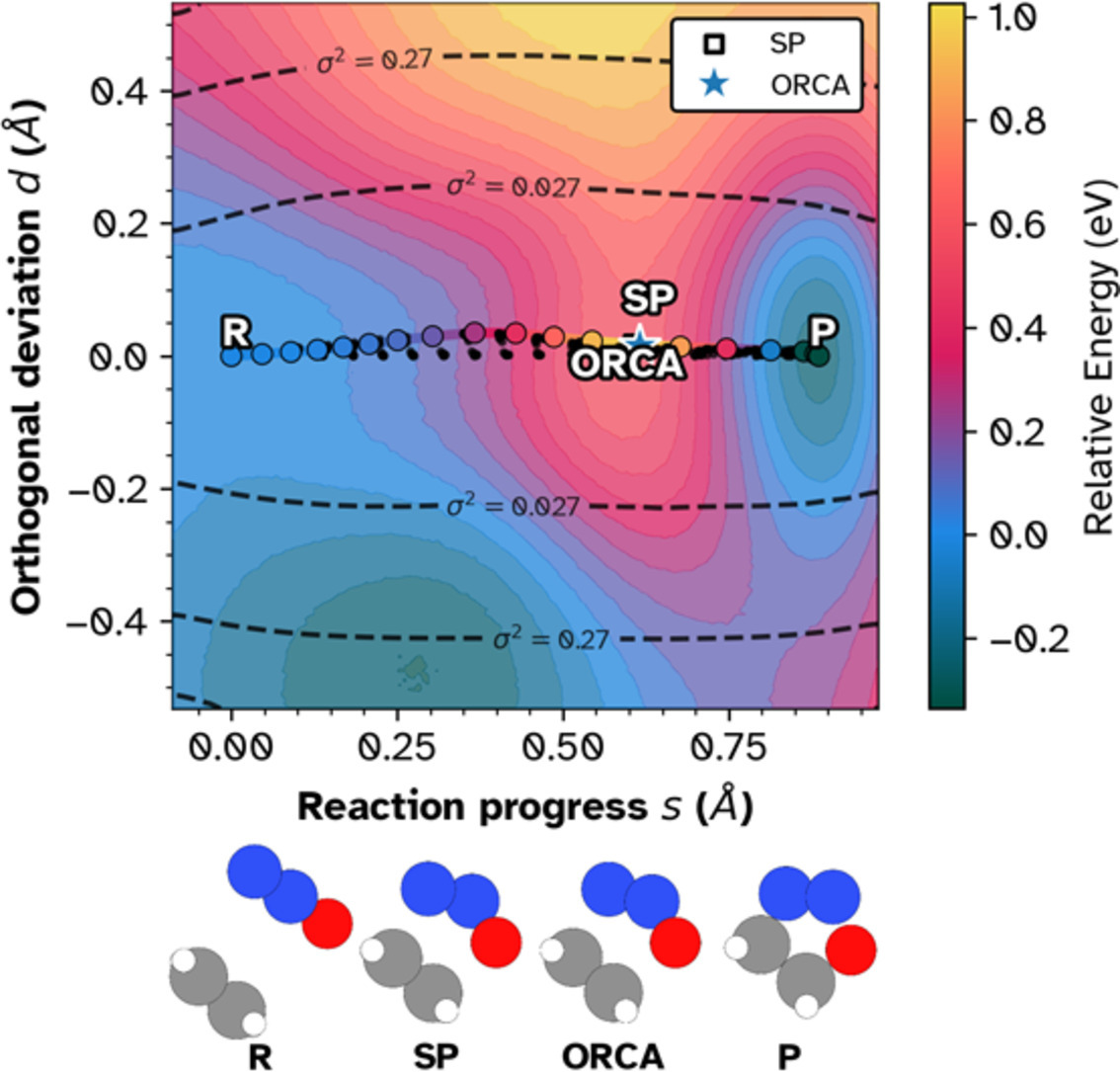
Figure 1: Graphical abstract from the MethodsX 2D RMSD visualization paper (Goswami 2026).
Code
- eOn – Co-maintainer; NEB and dimer method implementations
- featom – High-order finite element solver for atomic structure (from Chapter 3 of the thesis, the Certik collaboration (Čertík et al. 2023))
Related writing
- eOn posts on rgoswami.me